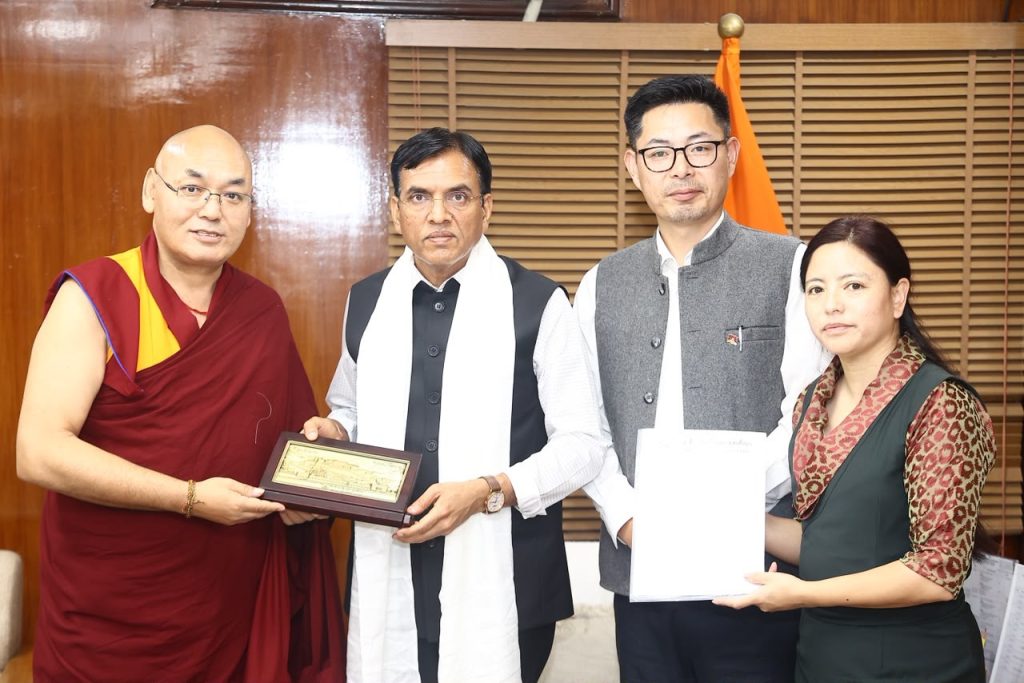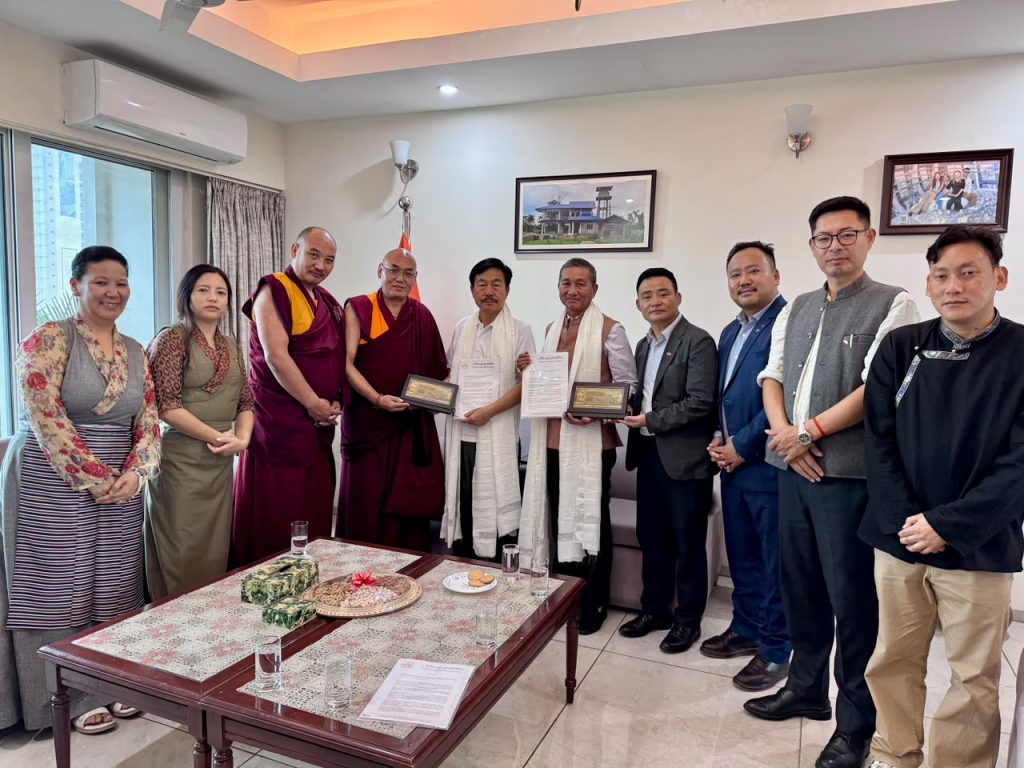


Dharamshala: Parliamentarian Juris Vilums of Latvia visited the Tibetan Parliament-in-Exile earlier today, 7 March 2026, where he met with Speaker Khenpo Sonam Tenphel and Deputy Speaker Dolma Tsering Teykhang. During the meeting, they discussed a wide range of topics of shared interest, including the current situation inside Tibet under the occupation of the People’s Republic of China.
Welcoming the Latvian lawmaker, the Speaker expressed appreciation for his significant presence at the 9th World Parliamentarians’ Convention on Tibet, held in Tokyo last year. He also highlighted Tibet’s special connection with the Baltic states, recalling that the 7th World Parliamentarians’ Convention on Tibet was held in Riga, Latvia, in 2019 with the support of the Latvian Tibet Support Group, chaired by Janis, and the Latvian Parliamentary Support Group for Tibet.
Speaking about the first parliamentary support group for Tibet established in India in the 1970s, the Speaker also referred to similar parliamentary support groups around the world. He highlighted the Latvian Parliamentary Support Group for Tibet as one of the significant groups, noting that parliamentarian Vilums has shouldered significant responsibility within it.
The Speaker further reflected on the similar historical experiences of Tibet and Latvia, noting that both had endured foreign occupation. While Latvia successfully regained its independence in 1990, he expressed hope that Tibet may one day achieve a similar fate. Emphasizing that the Tibetan cause is not only for Tibetans but a global one, he explained that Tibet’s environment, religion, and language are of importance to the entire world.
The Deputy Speaker noted that Latvia’s history of struggle and its subsequent independence serve as an inspiration for Tibetans to work even harder. Acknowledging the shared experience of colonial occupation, she welcomed the lawmaker and remarked that his visit to Dharamshala signifies solidarity and support for democracy and truth, encouraging Tibetans inside Tibet.
Speaking on the critical situation prevailing in Tibet under the occupation of the People’s Republic of China (PRC), the Deputy Speaker highlighted the politically driven policy of coercing Tibetan children into colonial-style boarding schools. She explained that this policy deprives them of their right to study their language, religion, and culture, while attempting to indoctrinate them into pledging allegiance to the Chinese Communist Party (CCP) and its leadership.
Finally, the Deputy Speaker provided an overview of the evolution of Tibetan democracy, a gift bestowed upon the Tibetan people by His Holiness the Dalai Lama in 1960. She outlined the subsequent progress in democratic governance, from the establishment of the Tibetan Parliament-in-Exile on 2 September 1960, to the election of the first Kalon Tripa (Prime Minister) in 2001, the election of the first Sikyong in 2011, and the present leadership of the Central Tibetan Administration, with both the Sikyong and Parliamentarians elected by the Tibetan diaspora. She also explained the Tibetan Parliament-in-Exile’s biannual sessions, its composition, periodical visitation programs, and other initiatives.